
Freight Class Calculator
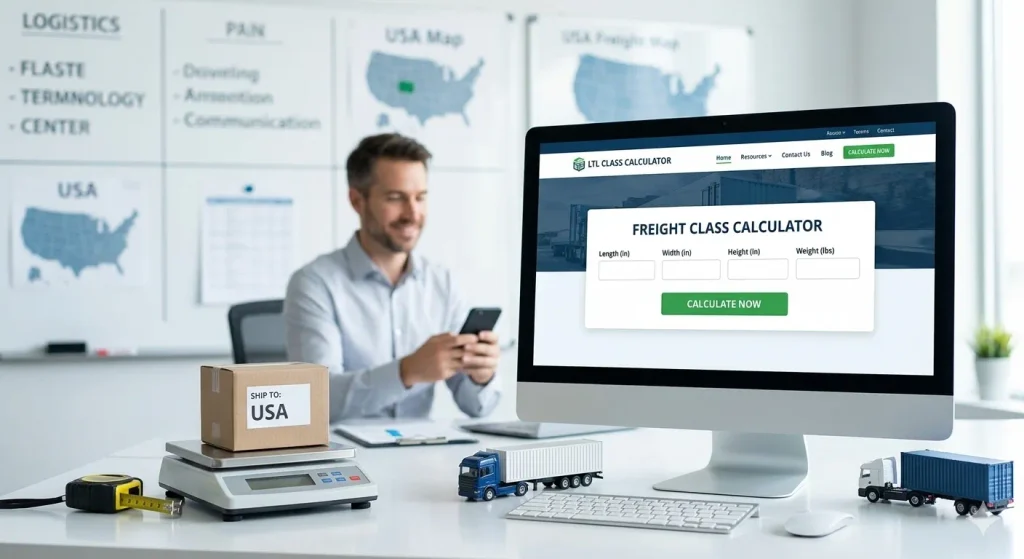
Enter your shipment dimensions and weight above to estimate freight class, density, and cubic feet.
Freight Class Lookup Tool
Our free LTL freight class calculator serves as an instant freight class lookup tool by analyzing your shipment’s density, weight, and dimensions based on standard USA shipping guidelines. To perform a lookup, simply enter your pallet dimensions and total weight above to instantly estimate your freight class, cubic feet, and pounds per cubic foot (PCF).
This density-based estimate is ideal for planning, quoting, and comparing shipments, though final carrier classifications may vary based on specific NMFC codes, commodity types, handling, stowability, and liability.
Standard 18-Tier NMFC Freight Class Density Chart
Use the following reference chart or NMFC Freight Class list to estimate your freight class based on pounds per cubic foot (PCF). Note: stowability, handling, and liability also affect the final NMFC classification.
| Density (pcf) | Freight Class |
|---|---|
| Over 50 | 50 |
| 35 – 50 | 55 |
| 30 – 35 | 60 |
| 22.5 – 30 | 65 |
| 15 – 22.5 | 70 |
| 13.5 – 15 | 77.5 |
| 12 – 13.5 | 85 |
| 10.5 – 12 | 92.5 |
| 9 – 10.5 | 100 |
| 8 – 9 | 110 |
| 7 – 8 | 125 |
| 6 – 7 | 150 |
| 5 – 6 | 175 |
| 4 – 5 | 200 |
| 3 – 4 | 250 |
| 2 – 3 | 300 |
| 1 – 2 | 400 |
| Less than 1 | 500 |
Click here to download Download Freight Class Chart in PDF
Freight Classification Made Simple in LTL Shipping Calculator
Getting your freight class wrong means overpaying. Instead of trying to guess, use our smart NMFC pallet freight calculator to instantly find your exact pallet density and class. It even recommends the best dimensions so you can pack smart and cut down your shipping spend.
Knowing your exact NMFC freight class helps you get accurate quotes whether you ship one pallet or a hundred. It is the best way to avoid surprise fees and penalties from your carrier.
Why Use Our USA Freight Tool?
- Stop Overpaying: Instantly lookup any of the 18 NMFC density tiers to secure accurate carrier quotes.
- E-commerce Ready: Perfect for Amazon, Shopify, and Walmart suppliers moving domestic freight.
- Carrier Compliant: Get precise values tailored for FedEx, UPS, Unishippers, and Estes.
What is a Freight Class?
Freight class is a standardized shipping category defined by the NMFC (National Motor Freight Classification). It helps US carriers determine shipping costs based on four factors: density, stowability, handling, and liability. Lower classes like Class 50 are dense and cheaper to ship, while higher classes like Class 500 are for light, fragile items. Using a professional and easy LTL Class Calculator ensures your shipment is categorized correctly before it leaves the dock.
Frequently Asked Questions (FAQ)
What is NMFC?
The National Motor Freight Classification (NMFC) system standardizes NMFC freight classes for all U.S. carriers, ensuring consistent pricing for LTL and FTL shipments.
Can pallet class change after shipping?
Yes. Carriers may reclassify shipments if weight or dimensions are inaccurate, which can result in additional fees.
Does LTL class affect delivery speed?
No. LTL class primarily affects cost, not transit time.
Why is freight class the first value result in this LTL shipping calculator?
You know what, the shipping class directly belongs to the shipping cost. The density and the volume then follow to help optimize the packaging and ensure cost-efficient shipping. Freight class directly determines shipping cost. Density and volume follow to help optimize packaging and ensure cost-efficient shipping.
Can I use the numbers for shipping plans on Amazon FBA, AWD, Etsy, Walmart, eBay, or other marketplaces?
Absolutely. The freight class, density, and volume values from shipping class calculator can be used to create accurate shipping plans, book LTL or FTL shipments, or generate labels on Amazon, AWD, Etsy, Walmart, eBay and/or any other platforms or shipping carriers.
Start Using this best NMFC Shipping Class Calculator Now
Instantly determine your shipping class, density, and volume with our free and accurate pallet class calculator. Perfect for small business owners, e-commerce sellers, and virtual assistants managing shipments with Amazon FBA, AWD, Shopify, Etsy, Walmart, major carriers, or third-party platforms, making smarter shipping decisions and to avoid costly mistakes.
How to use this NMFC freight class calculator to calculate freight class
Kindly feel free to contact us for any query, or read about us.